

Troy Tamashiro brings CHC leadership and health plan experience to role as COO at Yuvo Health

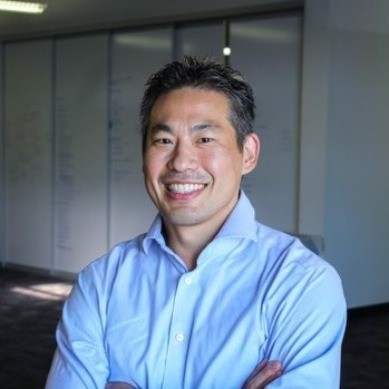
Yuvo Health is proud to announce Troy Tamashiro has been named chief operating officer. Troy is familiar to our partners and colleagues in Hawai’i, where he has served as Yuvo’s market president for the last year, leading Yuvo’s IPA development across the state. We’re excited for all of our partners to now benefit from Troy’s unique experience that spans health center and IPA leadership as well as building value-based care programs within multiple health plans.
Before joining Yuvo, Troy served as chief executive officer at Heartland Alliance Health, a community health center based in Chicago, executive director of PACE (Program of All-Inclusive Care for the Elderly), and as executive vice president and vice president of program innovation at Team Praxis, the largest Managed Services Organization (MSO) in Hawai’i.
We recently asked Troy about what drew him to this work, what he sees differently now that he has worked on both the health center and health plan sides, and what he tells health center leaders who are navigating a difficult moment.
What drew you to working with health centers?
My background is in innovation, setting up value-based care programs and piloting new payment models inside health plans. We talked about quality metrics, co-location of services and whole-person care, but I didn’t really have the opportunity to see it in practice day-to-day.
The pandemic brought a heightened awareness to the value of those tenets of value-based care. In particular, I saw how much awareness it brought to the psychosocial side of healthcare. And as I worked with health centers, I saw how they were already integrating primary care and behavioral health in a way that others weren’t.
The patients are more complex, and the care is more complicated, which means there's more urgency for health centers to transform, and a greater opportunity to actually improve care and health outcomes for more people.
It's personal too. When my father got sick, I witnessed the flaws in our healthcare system firsthand. The system as a whole needs to improve, and because health centers already deliver more integrated care, they’re uniquely positioned to lead that improvement.
Is there a story from your time leading a health center that still shapes how you think about this work?
We worked with a large population of patients experiencing homelessness, and I will always remember seeing a man come into our center without shoes on. And he wasn’t the only one. What struck me was that he asked for our director of operations by name. Turns out, he knew that the director kept a bag of shoes that he would hand out to people who needed them.
That moment showed me the heart, passion and dedication our team had for the patients they serve.
As someone who has spent my career in administration, I think it’s very important for healthcare administrators to carve our time to engage with the staff who work day-to-day with the patients they serve.
Running a health center is more than digging through spreadsheets or attending weekly status meetings. We have a responsibility to help the people in need within our community. That’s why we’re here.
Bottom line, it comes down to the patient-provider encounter. We need to ask ourselves: is this the type of care I’d want my grandmother to receive? The people who put their heart and soul into patient care are true heroes and they don't get enough credit.
You've led IPA and MSO work and worked on the health plan side too. What's something health center leaders think about value-based care that you see differently now?
The biggest challenge for health center leadership is that healthcare reimbursement has always been built around fee-for-service, and value-based care asks you to focus on outcomes instead. That's a real mindset shift, and it changes how a practice has to operate at every step, even something as basic as scheduling an appointment. For example, in value-based care, you're already doing pre-visit planning before the patient walks in the door.
Most health centers are working with patients across a mix of health plans, some fee-for-service and some value-based, and that makes it genuinely difficult to run a practice. What I've seen, including in my time leading value-based care programs for IPAs across Hawai'i, is that once a health center reaches a critical mass of patients in value-based arrangements, those practice patterns tend to spread across the whole patient population rather than staying siloed by plan type. Health centers apply the best practices for patient care within VBC to their fee-for-service patients too.
It isn’t as easy as flipping a switch, though.
Getting to this point takes resources most health centers don't have on their own: additional technology, an understanding of quality measures, data available at the point of care, care managers and the time to spend with patients. That's the gap a partner like Yuvo Health is built to fill — bringing those resources through economies of scale.
One example that stuck with me is when a primary care clinic moved off fee-for-service onto a capitated payment model, where the physician receives a set payment per patient per month. A lot of their existing practice patterns, like seeing every patient monthly, turned out to be built around fee-for-service reimbursement rather than what patients actually needed.
Once they shifted to VBC, they moved toward regular nurse check-ins by phone to track medications and stay on top of chronic conditions like managing A1C, with fewer in-office visits. Patients appreciated it because it was easier than arranging transportation, and it freed up providers to spend more time with their sickest patients and see more patients quickly after a hospital stay.
That's not something you'd typically do under fee-for-service, since a phone call with a nurse usually isn't reimbursed. But the VBC model prioritizes keeping people healthy, not getting them in the door.
What is a misconception people in healthcare have about community health centers?
I sometimes hear people say “community health center” as if each organization could be swapped for another with negligible difference.
CHCs have much in common, like their organizational structure and governance, commitment to their communities, resource limitations, and more, but each CHC is unique in who they serve, how they are managed and the culture of the community they are part of.
We see this among our Yuvo Health partners, some of whom serve large populations of people who identify as LGBTQ+, others who have exceptionally strong outreach to people experiencing homelessness, migrant communities, or religious groups. I have seen the tailored, culturally-sensitive approach that each CHC takes to make their patients feel welcome, like Hawai’i health centers exuding the feeling of aloha. CHCs recognize this is the first step to building the trust a healthcare provider needs with their patients.
Here’s what’s often missed, both from outside and within health centers:
Each CHC has something it does exceptionally well.
They often don’t realize the unique nature of their strength, because it just feels normal to them. It’s baked into who they are. That's part of the value of being in a network like Yuvo's. Health center leaders can talk to each other, share what's working and cross-pollinate ideas across regions.
Given everything health centers are navigating right now, from H.R. 1 to funding uncertainty to workforce pressure, what do you say to leaders who are feeling discouraged?
Change brings a lot of uncertainty, and that creates real anxiety. Of course that’s compounded by the assumption that more of their care will go uncompensated due to Medicaid eligibility provisions within H.R.1, increasing administrative demands around community engagement rules for Medicaid patients, consistent underfunding, staff shortages and more. It is not easy leading a community health center.
So, I understand how value-based care can feel like one more thing. From working with physicians who've been through the shift to value-based care, I've seen two types of responses: some organizations see it as just too big of a change — one they don’t have the resources to manage — and they hope it passes. Others see the opportunity in the change.
The underlying focus of value-based care, quality of care, is not something to dismiss. It's an undeniable improvement, and there's an opportunity to be compensated for doing it well. Cesar lays it out well, why now is actually a particularly opportune moment for CHCs to explore value-based care.
There are also the non-revenue benefits, like a more balanced workload for physicians, the opportunity to practice true team-based care where everyone is able to work at the top of their license, resources to help your patients get the care they need beyond your four walls, and access to the information you need to provide effective preventative care to avoid health crises.
The challenge is that it's genuinely different from how health centers have always operated, which is exactly why having a partner to work through it alongside you matters. Redesigning a practice can take years, but with the right partner, you can start making adjustments from day one.
What do you hope to accomplish in your role as chief operating officer at Yuvo Health?
I'm passionate about data-driven operations and building that thinking into the decisions we make every day. I look forward to using that data to continuously strengthen the relationships between our health center partners and health plans.
Enabling more health centers to experience the benefits of value-based care will not only lead to healthier communities in their service areas, but will also reinforce the model and the value of health centers within it, which drives improvement across the whole healthcare system.
I’m excited to be at an organization with a culture that feels so authentic and inclusive. That’s what drew me to Yuvo Health in the first place. It starts with Cesar and it runs through the whole team. People here have a real heart for this work. It's not just a job to them.


Subscribe to our monthly newsletter just for community health centers
We’ll send occasional emails with Yuvo and FQHC news.